
Baly | Order Taxi and Food
Two RiversTravel & Local
4.57.14K Reviews
- Version
- 3.3.2
- Installs
- 10.00M
- Age Rating
- Everyone
Screenshots


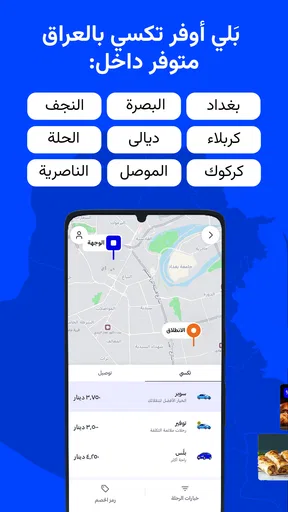





Our Review of Baly | Order Taxi and Food
 Analysis by Appyee
I approached Baly | Order Taxi and Food as a practical travel-and-local app rather than as a full replacement for every service on my phone. Its central idea is simple: bring restaurant ordering and taxi booking into one place, with the appeal of finding everyday transport and meals without paying more than necessary. After using it as an on-the-go companion, my view is that Baly is most useful when convenience matters more than having the widest possible selection. It can reduce the number of apps I need to switch between, but it works best when I already know what I want and when the service coverage around me is suitable.
The app is free to install, aimed at Everyone, and developed by Two Rivers. It belongs to the Travel & Local category, although the food-ordering side makes it feel broader than a standard taxi application. The current version is 3.3.2 and it runs on Android 7.0 or later. That combination makes it accessible to people using older Android phones, which is useful for a travel tool that may be installed temporarily before a trip rather than used as a primary app every day.
One app for the ride there and the meal afterward
The strongest argument for Baly is the way its two purposes fit a real routine. I can imagine using it after arriving in an unfamiliar area: arrange a taxi first, then order food later from the same app instead of searching for a separate delivery service. That is not a revolutionary concept, but it is genuinely convenient when I am tired, carrying luggage, or trying to keep my phone organized while moving around.
The app’s public popularity also gives it some credibility. It has an average rating of 4.5 from around 480 thousand ratings, with roughly 7.1 thousand written reviews and over 10 million installs. Those figures do not guarantee that every ride or order will be smooth, because local availability and individual experiences can vary, but they do show that Baly is not an obscure experiment with only a handful of users.
What I like most is the mental simplicity. Instead of thinking, “Which taxi app works here?” and then, “Which food app should I open afterward?”, Baly offers one starting point for both decisions. That matters particularly during short stays, when I do not want to build an entire collection of local apps. It is also useful for someone who prefers a single account and a familiar interface over comparing several providers every time.
Still, I would not treat the combined design as proof that Baly is automatically better than specialist alternatives. A dedicated taxi app may be stronger when I need detailed ride controls or a very large driver network. A dedicated food platform may be preferable when restaurant discovery, menus, filters, or delivery tracking are my main priorities. Baly’s advantage is the connection between services, not necessarily depth in every individual feature.
How the food side fits everyday use
The food function makes the most sense for straightforward orders. If I am staying in a hotel, working late, or arriving home without the energy to cook, opening one local app for a meal is less effort than browsing several services. I would use it to decide what is available nearby, compare the practical choices shown in the app, and place an order without turning the process into a research project.
A useful habit is to check the available restaurants before I become hungry. That gives me time to see whether the nearby selection matches what I want, rather than assuming that every restaurant or cuisine will appear. It also helps me distinguish between “this app is convenient for my area” and “this app is my complete food directory.” Those are different expectations, and the second one can lead to disappointment.
I would also keep the order uncomplicated when using a service in an unfamiliar place. Clear delivery instructions, an accurate location, and a quick check of the selected items can prevent avoidable confusion. This is especially important around hotels, apartment buildings, campuses, and large public venues, where a driver may need more guidance than a normal street address provides.
For regular meals, the real benefit is not just ordering from the sofa. It is reducing friction at awkward moments. Imagine finishing a long day in a city you do not know well: I can arrange transport, return to my accommodation, and later look for dinner without downloading another local service. That workflow is more valuable than the individual food-ordering screen by itself.
Where the taxi function earns its place
The taxi side is naturally useful for short urban journeys, airport transfers, evening trips, or any situation where I would rather request a ride than negotiate transport on the street. Having the booking process beside food ordering creates a sensible travel rhythm: move around when needed, then solve the meal problem from the same place.
My practical advice is to request a ride with a little breathing room rather than waiting until the last possible minute. A combined travel app is convenient, but convenience does not remove traffic, driver availability, or the uncertainty that comes with busy periods. If I have a train, flight, appointment, or timed reservation, I would still leave a sensible margin and keep an alternative plan in mind.
Another useful workflow is to confirm the pickup point carefully before requesting the vehicle. In crowded streets, shopping areas, and transport hubs, the closest map position may not be the easiest place for a driver to stop. Choosing a recognizable pickup location and watching the app’s instructions can make the handoff smoother than simply using the default position.
That small amount of preparation is one of the differences between using Baly casually and using it well. The app can help arrange the ride, but I still need to make the meeting point practical. No booking service can fully solve a vague pickup location or a last-minute request in a crowded area.
The strongest case for Baly is convenience, not endless choice
In my experience, Baly is easiest to recommend to people who value an uncomplicated local hub. It is attractive for travelers, students, workers who move around town, and households that occasionally need both delivery and transport. The free price also lowers the barrier to trying it, particularly when I am visiting somewhere and do not yet know which local services are dependable.
The app’s age rating of Everyone makes it broadly approachable for families and mixed-age households. That does not mean every situation is equally suitable for every user, but it does make Baly feel like a general-purpose utility rather than a niche product. I can see it being installed on a shared family phone or suggested to someone who wants a simple way to handle local errands.
Its install history reinforces that practical positioning. With more than 10 million installs, Baly has reached a substantial audience, and the 4.5 average suggests that many users find the overall experience worthwhile. I would interpret that as a reason to test it confidently, not as a reason to stop comparing it with alternatives in my own location.
The meaningful limitations I would consider first
The main weakness is the same feature that makes Baly appealing: combining taxis and food can mean that neither side feels as specialized as a leading single-purpose competitor. If I care deeply about restaurant variety, advanced cuisine discovery, or the most detailed delivery experience, I may prefer a food-focused service. If my priority is transport reliability across many districts, a taxi specialist may offer a better fit.
Coverage is another practical consideration. A local service can be excellent in one area and less useful in another. Before depending on Baly for an important journey or a meal at a specific time, I would open it and check what is actually available around my location. That quick test is more informative than assuming that a large install count means identical coverage everywhere.
There is also a small cognitive trade-off. Two service types in one app are convenient, but they can make the experience feel less focused than an app built around one task. When I am in a hurry, I want the relevant action to be obvious. Baly works best when its combined layout remains easy for me to understand; users who dislike multipurpose apps may find a dedicated taxi or food application more direct.
I would not choose Baly as my only plan for a time-critical trip without checking the situation first. For an airport departure, a medical appointment, or an event with a strict start time, I would compare the expected availability and keep another transport option in mind. The app is a useful booking tool, but it should not encourage me to ignore normal travel planning.
Who should install it, and who may prefer something else?
I think Baly is a strong match for someone who wants one free app for local rides and restaurant meals, especially when visiting a new place or managing a busy daily schedule. It is also a sensible choice for users who do not want to maintain several local-service accounts. The best audience is not necessarily technology enthusiasts; it is people who value fewer steps and a familiar starting point.
It is particularly appealing for short-term visitors. Instead of learning separate services for transport and food, I can begin with Baly, check the local options, and decide whether it covers my needs. If it does, I avoid unnecessary downloads. If the selection is narrow, I learn that early enough to look for a specialist alternative.
Families may appreciate the broad age suitability and the ability to handle two common errands in one place. Someone working irregular hours may also benefit from having taxi booking and meal ordering close together. The app is less compelling for a user who already has a preferred taxi service, a preferred food platform, and no interest in combining them.
I would also steer away from relying on it blindly if my location has limited service availability or if I need highly specialized controls. In those cases, a dedicated alternative may be worth the extra app. Baly is not a universal answer; its value depends on whether the local network and the combined workflow match the way I travel and eat.
Small habits that make the experience more reliable
My first recommendation is to test both sides before an urgent need appears. Checking a restaurant search and a sample taxi pickup while I have time tells me whether Baly is useful in my neighborhood or destination. This is a better approach than waiting until I am stranded, hungry, or already late.
Second, I would keep location details precise. For food, that means using a delivery point that another person can recognize. For taxis, it means selecting a safe and visible pickup area rather than assuming the map marker explains everything. These details sound minor, but they often determine whether a digital booking turns into a smooth real-world handoff.
Third, I would use the app as a starting point for comparison when the situation matters. For a casual meal or ordinary ride, Baly’s convenience may be enough. For a special occasion, a tight schedule, or an unfamiliar district, I would compare the available choices and timing with another service before committing. The app is strongest when I let it simplify routine decisions without asking it to remove every bit of uncertainty.
Finally, I would keep the application updated when possible. Version 3.3.2 is the current version, and staying current is a sensible way to avoid using an outdated build when relying on a travel utility. I would also make sure my phone meets the Android 7.0 minimum requirement before planning around it, particularly if I am using an older device.
My verdict after weighing the trade-offs
Baly succeeds because it connects two ordinary needs in a way that feels natural: getting somewhere and getting something to eat. I value that connection more than I expected, especially during travel or on busy days when switching between several services becomes irritating. The free entry point, broad age rating, established audience, and strong average rating make it an easy app to try.
My recommendation comes with a clear condition: treat Baly as a convenient local hub, not as a guarantee that it will beat every specialist service. Check the nearby availability, give important journeys extra time, and use precise pickup or delivery details. With those habits, the app can be a genuinely useful companion for routine rides and meals.
For me, the final judgment is positive. Baly is worth installing if your priority is a simpler travel-and-food routine, particularly when you are new to an area or want to avoid juggling multiple apps. I would choose something more specialized when maximum restaurant choice, detailed transport options, or critical-time reliability matters more than having both services together.
Verdict
Strengths of Baly | Order Taxi and Food
- Book taxis quickly with clear pickup and destination details.
- Food delivery and ride services are available in one app.
- Useful for comparing available transport options in supported areas.
- Order tracking helps you follow rides and food deliveries.
- Convenient digital payments reduce the need to carry cash.
Limitations of Baly | Order Taxi and Food
- Service availability may vary significantly by city or region.
- Busy periods can lead to longer wait times for drivers or couriers.
- Prices may increase during high-demand periods or bad weather.
- Food delivery menus and restaurant choices depend on your location.
- A stable internet connection is needed for booking and live tracking.
Similar Picks in This Category
View All
Google Maps
Google LLC3.4

Google Maps Go
Google LLC4.1

Booking.com: Hotels & Travel
Booking.com Hotels & Vacation Rentals4.8

Google Earth
Google LLC3.8

Skyscanner Flights Hotels Cars
Skyscanner Ltd4.8

trivago: Compare hotel prices
trivago N.V.4.4
Frequently Asked Questions
What is Baly | Order Taxi and Food?
Baly is a multi-service app that lets users request taxi rides and order food from participating restaurants in one place. Depending on your location, it may also provide additional local services, payment options, delivery tracking, and driver or courier communication. Available features, restaurant choices, vehicle types, and service coverage can vary by city, so check the app before relying on it for a specific trip or order.
How do I order a taxi or food through Baly?
After installing Baly, create an account and allow location access if you want the app to detect your pickup address automatically. For a taxi, enter your destination, review the estimated fare and available ride options, then confirm the request. For food, choose a restaurant, add items to your basket, verify delivery details, and place the order. Always review the final price, fees, and estimated time before confirming.
Is Baly available in every city, and what services can I use?
Baly’s availability depends on the country and city where you are located. Some areas may offer both taxi booking and food delivery, while others may have limited restaurant coverage, fewer drivers, or only selected services. The most reliable way to confirm availability is to enter your current location in the app and browse the services shown. Coverage and operating hours may change over time.
How much do rides and food deliveries cost on Baly?
Prices on Baly are generally calculated according to factors such as distance, route, vehicle category, restaurant pricing, delivery fees, service charges, taxes, and demand. Taxi fares may be estimated before booking, while the food checkout screen should display the item total and additional charges. Promotions or discounts may reduce the final amount, but users should check their eligibility and expiration conditions before placing an order.
What should I do if my ride or food order has a problem?
If a driver is delayed, an order is missing, food arrives damaged, or you are charged incorrectly, open the relevant trip or order in the Baly app and use its support or help section. Provide accurate details and, when appropriate, photos or screenshots. Resolution options can depend on the situation and local policies. For safety-related issues during a ride, contact emergency services first and then report the incident.
